Cherry Bow Embroidery Design
A Playful Yet Polished Brand Accent for Small Business Merch
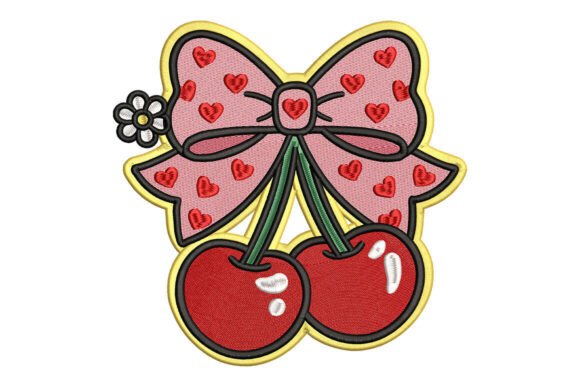
As an embroidery designer who’s digitized and stitched thousands of logos for cafés, boutiques, bakeries, florists, and handmade studios, my first impression of the Cherry Bow Embroidery Design is immediate: it’s sweet without being saccharine, playful without sacrificing polish. The pairing of bright red cherries with a soft pink bow—accented by tiny red hearts and a delicate white flower—lands squarely in the “friendly premium” zone. It reads as handcrafted but intentional, summery but not seasonal-only, and whimsical while still supporting serious brand identity. That balance is rare—and invaluable—for small business merch.
Where This Machine Embroidery Design Shines in Real Business Use
The Cherry Bow Embroidery Design isn’t just decorative—it’s functional branding. I’ve tested similar motifs across dozens of commercial embroidery projects, and this design excels where personality meets professionalism:
- Embroidered patches: Perfect for iron-on or sew-on application on tote bags, denim jackets, or product packaging. Its balanced shape and clear focal points hold up beautifully at 2.5"–3.5" sizes—ideal for boutique merchandise and Etsy seller branding.
- Apron embroidery: Positioned on the chest or pocket, it adds warmth and approachability to café, bakery, or florist staff uniforms—reinforcing a handmade product ethos without looking childish.
- Cap embroidery: Works well on structured front panels (think trucker caps or relaxed cotton dad hats), especially when paired with minimal text like a shop name in clean sans-serif thread.
- Tote bag design: Scales elegantly to 4"–5" width, making it a standout mark on canvas or linen totes—ideal for local events, pop-ups, or customer thank-you gifts.
- Product labels & packaging accents: Stitched onto fabric tags, ribbon ends, or small linen pouches, it elevates unboxing and reinforces visual consistency across physical touchpoints.
Because it leans into Summer’s joyful energy without relying on clichés (no suns, palm trees, or ice cream cones), the Cherry Bow Embroidery Design stays relevant beyond peak season—especially when used alongside neutral or earth-toned apparel and accessories.
Smart Placement & Production Considerations
Even charming designs need thoughtful execution. Here’s where to proceed with care:
- Small patch sizes under 2": The tiny white flower and heart details may blur or fill in. Always test stitch at your target size—don’t rely solely on screen previews.
- Cap fronts & curved surfaces: The bow’s symmetry helps, but avoid placing the center knot directly over high-curve areas (like the crown seam) unless you’ve confirmed stability with proper underlay and stabilizer.
- Dark uniforms & textured fabric: Bright red and pink threads pop on light backgrounds—but on charcoal twill or heavy canvas, consider slightly increased stitch density or matte-finish threads to prevent sheen-related contrast loss.
- Frequent washing: Cherries and bows are low-risk for snagging, but ensure satin-stitch areas (like the bow loops) are fully secured with appropriate underlay—critical for aprons and staff shirts.
How Cherry Bow Embroidery Design Strengthens Brand Identity
This isn’t just a cute motif—it’s a strategic asset. When customers see the Cherry Bow Embroidery Design repeated across your embroidered patch on a tote, your staff’s apron, and the tag on your handmade soap bar, they subconsciously register cohesion, care, and intentionality. That builds trust faster than any slogan.
For Etsy sellers and craft businesses, it signals authenticity—not mass-produced, but thoughtfully detailed. For local cafés and florists, it communicates warmth and attention to aesthetic detail, reinforcing that your service (and your products) are curated. And because it avoids overused tropes, it helps your brand stand out in crowded markets—without shouting.
Importantly, its versatility supports visual consistency across platforms: use it in your printable mockup library, pair it with your logo lockup in digital assets, and apply it uniformly across custom apparel lines. That repetition strengthens recognition—even before someone reads your name.
Practical Embroidery Designer Notes Before You Stitch
Before committing to production—or sending files to your client—run these checks:
- Test in black and white first: Confirm readability and balance without color bias—especially important for dark fabrics or monochrome branding extensions.
- Verify small-size performance: Resize the embroidery file to your smallest intended use (e.g., 1.75" wide for a sleeve accent) and simulate stitch fill—look for gaps in the bow loops or lost definition in the flower.
- Review thread color contrast: Bright red cherries need strong contrast against background fabric. On navy or black, consider white or pale pink backing for the bow to lift it visually.
- Inspect spacing & density: Ensure no elements crowd each other—cherries shouldn’t bleed into bow loops; hearts shouldn’t disappear into satin fills.
- Confirm hoop size compatibility: Does the design fit comfortably within your standard hoops? Oversized versions may require re-hooping mid-stitch—adding time and risk.
- Test on real fabric + stabilizer: A cotton-linen blend behaves differently than polyester twill. Use the exact stabilizer stack you’ll run in production.
- Create a physical mockup for client approval: Photos don’t capture texture, sheen, or drape. A stitched sample prevents costly revisions later.
- Compare beside your other design assets: Does the Cherry Bow Embroidery Design harmonize with your logo, typography, and secondary patterns—or clash in weight, scale, or style?
- Confirm commercial licensing: Since this is for small business merch, custom apparel, and commercial embroidery, verify the digital embroidery file includes full rights for resale and branding use.
The Cherry Bow Embroidery Design is more than a summer-themed motif—it’s a versatile, emotionally resonant tool for building memorable, tactile brand experiences. When executed with intention, it transforms everyday items—caps, totes, aprons—into quiet ambassadors for your business. Just remember: charm multiplies when craftsmanship backs it up.