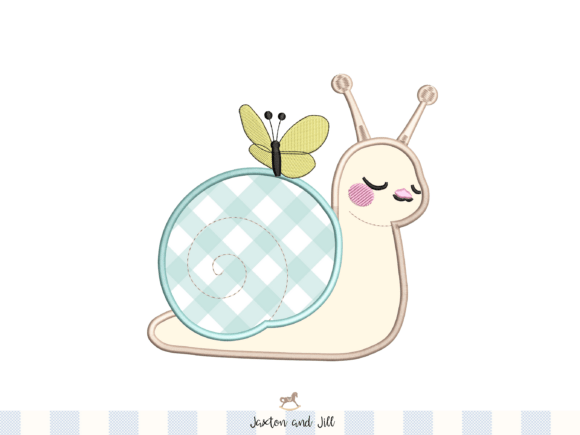
Snail Applique Machine Embroidery Design
First Impression: Whimsical, Soft, and Instantly Recognizable
As an embroidery designer who’s curated over 200 craft fair booths in the past decade, my gut reaction to Snail Applique Machine Embroidery Design is immediate: it’s a gentle standout. Not loud or trendy—just quietly charming. The phrase “enchanting world of nature’s little wonders” lands perfectly. This isn’t a cartoon snail or a meme—it’s a tender, nursery-appropriate motif with clear storytelling: butterfly + gingham shell = soft curiosity, not clutter. It reads as rustic-modern—think farmhouse meets Montessori playroom—with enough visual warmth to draw parents, gift buyers, and boutique owners at 10 feet.
Where It Shines on Craft Fair Products
This design thrives where handmade intention meets everyday utility. On a tote bag design, placed just below the shoulder strap or centered on the front panel, it becomes a conversation starter—not too big, not too small. It reads beautifully at 3.5"–4.5", making it ideal for medium-scale items like tea towel embroidery or apron embroidery. A single snail appliqué on a linen tea towel? Yes—especially when paired with hand-stitched hems and natural fiber tags. It elevates the item from “kitchen staple” to “thoughtful small shop product.”
For embroidered patches, Snail Applique Machine Embroidery Design works exceptionally well as a sew-on or iron-on accent on denim jackets, backpacks, or baby caps. Its layered construction (appliqué shell + delicate butterfly) adds dimension without overwhelming. On pillow covers or fabric pouches, it holds attention without competing with bold prints—ideal for coordinated nursery collections. And for market bags or reusable produce sacks? A subtle placement near the seam or corner gives quiet brand recognition that feels personal, not promotional.
What Makes It Sell at the Booth—and Online
In person, this design stops scrollers. Why? Because it’s emotionally resonant—not just decorative. Parents pause for the butterfly; designers pause for the gingham texture rendered in thread. It photographs cleanly for Etsy listings and printable mockups: high contrast between shell and background, balanced negative space, and no tiny lettering or micro-details that vanish in JPEG compression. As a digital embroidery file, it’s inherently repeatable—no complex color changes mid-stitch, no excessive trims. That means faster batch production for commercial embroidery runs, fewer thread breaks, and consistent quality across 50+ tote bags or 100+ tea towels.
It also supports brand consistency. If your line leans into nature-themed nursery goods or slow-craft aesthetics, Snail Applique Machine Embroidery Design reinforces that voice without needing rebranding. At the booth, one well-executed sample—a linen apron with the snail centered on the pocket—does more selling than three flyers. Customers touch it, smile, and ask, “Is that hand-done?” That’s handmade product magic.
Careful-Use Notes Every Designer Should Know
- Dense stitch areas: The gingham shell likely uses fill stitches with directional texture—check stitch density before scaling down below 3". Too dense on lightweight cotton can cause puckering.
- Tiny details: That “endearing butterfly” may have fine wing veins or antennae. Test on textured towels—looped terry or heavy waffle weave can swallow delicate elements.
- Curved surfaces: Avoid placing full-size Snail Applique Machine Embroidery Design on the front of curved cap panels. Scale down to 2.25" max—or use only the butterfly as a minimalist accent.
- Dark fabric: Gingham relies on contrast. On navy or charcoal, confirm thread colors include light-toned options (ecru, pale mint, buttercream) to preserve the pattern’s legibility.
- Fabric texture matters: Skip ultra-thick canvas or stiff duck cloth—the appliqué layer needs some drape to lie flat. Stick to quilting cotton, linen-cotton blends, or midweight twill.
Production Must-Dos Before You Hoop a Single Piece
- Test the Snail Applique Machine Embroidery Design on scrap fabric matching your final product—same weight, same wash treatment.
- Check thread contrast across 3–4 fabric colors (ivory, sage, oat, navy) using real spools—not just screen previews.
- Review spacing: Does the butterfly sit cleanly on the shell without floating or crowding? Misaligned appliqué layers ruin perceived quality instantly.
- Confirm hoop size compatibility—especially if stitching on narrow items like tea towel hems or pouch flaps.
- Inspect stitch density in the gingham fill—overly tight fills trap stabilizer residue; too loose loses definition.
- Use cutaway or tear-away stabilizer based on fabric stretch—never skip stabilizer on knits or loosely woven linens.
- Create at least one real mockup: embroider it, wash it, press it, and hold it under booth lighting.
- Compare fabric colors side-by-side—what looks harmonious on screen may clash in natural light.
- Verify commercial licensing applies to finished products—this is non-negotiable for Etsy sellers and wholesale partners.
Final Thought: A Quiet Workhorse for Thoughtful Makers
Snail Applique Machine Embroidery Design won’t scream—but it will linger. In a sea of glitter fonts and oversized florals at a craft fair, it offers relief: a moment of calm, a whisper of wonder, a tactile detail that says “I made this with care.” It fits seamlessly into nursery collections, but its charm extends beyond—into kitchen studios, garden shops, and mindful lifestyle brands. As a machine embroidery design, it balances artistry and efficiency. As a craft fair product, it invites connection. And as a handmade product, it reminds buyers that small things—like a snail with a butterfly on its back—still carry big meaning.