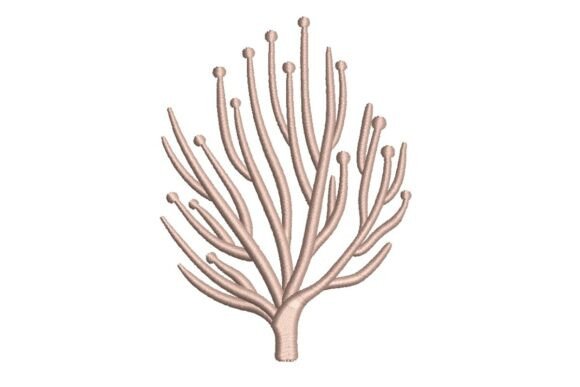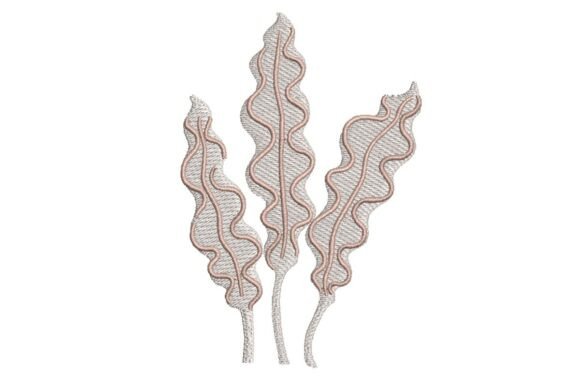
Stylized Laminaria Seaweed Embroidery Design
First Impression: Elegant, Calm, and Quietly Distinctive
As an embroidery designer who’s prepped over 200 craft fair booths—and watched which designs stop shoppers mid-aisle—I immediately recognize the quiet strength of the Stylized Laminaria Seaweed Embroidery Design. It’s not bold. It’s not cute. It’s not rustic or festive. It’s elegant, with a soft modern rhythm that reads as premium at three feet and intimate at six inches. That trio of wavy, textured fronds—evoking kelp, oarweed, coastal stillness—lands somewhere between botanical illustration and mindful minimalism. For handmade market buyers seeking refined nature motifs without cliché florals, this stands apart in the Single Flowers category—not because it’s a flower, but because it occupies that same emotional space: delicate, intentional, quietly symbolic.
Where It Shines on Craft Fair Products
On a crowded booth table, clarity and cohesion win. The Stylized Laminaria Seaweed Embroidery Design excels where subtlety reads as sophistication—not noise.
- Tote bag design: Centered on natural canvas or oat linen, it reads cleanly from across the aisle. The long fronds flow with the bag’s drape, avoiding stiffness. Ideal for boutique makers positioning as eco-conscious and design-aware.
- Apron embroidery: Placed just below the pocket or along the waistband, it adds artisanal calm to functional wear—especially effective on light denim or unbleached cotton.
- Tea towel embroidery: A single frond in one corner (or all three aligned vertically near the hem) balances utility and artistry. Works beautifully on textured flour-sack towels—its wavy lines echo natural fabric irregularities.
- Embroidered patch: Highly adaptable. Sewn onto denim jackets, market bags, or kids’ backpacks, it signals quiet confidence—not trend-chasing. Great for small shop product bundles.
- Fabric pouches & pillow covers: Here, the design’s organic scale shines. On a 5”x7” linen pouch, it fills space gracefully; on a 16” pillow cover, it anchors without overwhelming.
It performs less strongly on curved cap surfaces (frond flow distorts), dense dark fabrics (light grey thread loses definition), and ultra-thin polyester—where stitch density may telegraph poorly. Avoid using it as a tiny accent on keychains or zipper pulls unless simplified—original detail won’t resolve at sub-1” scale.
Real-World Production Notes Every Embroiderer Should Check
This isn’t just a pretty digital embroidery file—it’s a production decision. Before loading your machine, ask:
- Test on scrap fabric first. Especially with textured towels or thick apron twill—stitch density and thread tension shift dramatically.
- Confirm thread contrast. “Light grey or off-white” only works if your base fabric is truly light or mid-tone. On cream linen? Lovely. On heather grey? Fades. Always compare physical swatches.
- Review spacing and flow. Those wavy fronds need breathing room—crowding them into tight corners kills their movement. Leave at least ½” margin on all sides for optimal drape and visual rest.
- Match stabilizer to fabric weight. Lightweight cutaway for tea towels; medium tear-away for cotton totes; fusible + cutaway for structured caps.
- Create at least one real mockup. A photo of the Stylized Laminaria Seaweed Embroidery Design on an actual tote bag—not just a printable mockup—tells you more about color balance, scale, and perceived value than any screen preview.
Selling Smarter: Booth Impact, Online Listings, and Repeat Value
In person, this design draws the thoughtful buyer—the one pausing to trace a frond with their finger. It supports higher price points because it feels intentional, not mass-produced. Paired with neutral packaging and hand-stamped tags, it elevates your entire handmade product line.
Online, it photographs exceptionally well—soft shadows, clean lines, and natural texture translate beautifully to Etsy listings. Use flat-lay shots on raw wood or stone, and include one lifestyle image (e.g., embroidered tea towel draped over a ceramic mug). Its elegance makes it highly searchable for terms like “coastal embroidery,” “botanical tote,” “minimalist kelp design,” and “oarweed motif”—all low-competition, high-intent phrases.
For batch production? Yes—it’s repeatable. No tiny lettering, no nested fills, no fragile stems prone to snagging. As a machine embroidery design, it’s stable across hoop sizes—but verify your vendor’s recommended hoop size before digitizing for commercial embroidery. And always confirm commercial licensing before selling finished products—this is non-negotiable for Etsy sellers and wholesale partners.
Careful-Use Reminders for Maximum Clarity
Respect the design’s quiet power by avoiding conditions that mute its voice:
- Avoid heavy fabric textures (like bouclé or thick terry) unless you increase underlay and reduce stitch density—otherwise, the “textured” blad effect becomes muddy.
- Don’t shrink it below 3” height—fine wave details blur, losing the rhythmic elegance that defines it.
- Dark fabric requires re-threading in charcoal or soft black—not just darker grey—to preserve contrast and depth.
- Curved surfaces (caps, curved pouches) distort the frond’s natural arc. Opt for flat-panel placement whenever possible.
- If offering multiple thread colors, stick to tonal neutrals: oat, fog, stone, ash. Bright or saturated hues break its serene cohesion.
Final Thought: A Signature Piece, Not Just Another Design
The Stylized Laminaria Seaweed Embroidery Design isn’t filler. It’s a signature motif—one that builds brand consistency across your craft fair product range, strengthens booth display cohesion, and invites repeat engagement. Customers remember how it made them feel: grounded, refreshed, quietly seen. For the Etsy seller, the boutique maker, or the creative entrepreneur building a sustainable handmade business, that resonance is worth more than trend velocity. It’s timeless texture, thoughtfully stitched—ready to anchor your next collection.