Stylized Nautical Crab Embroidery Design
A Craft Fair Designer’s First Glance: Bold, Playful, and Instantly Recognizable
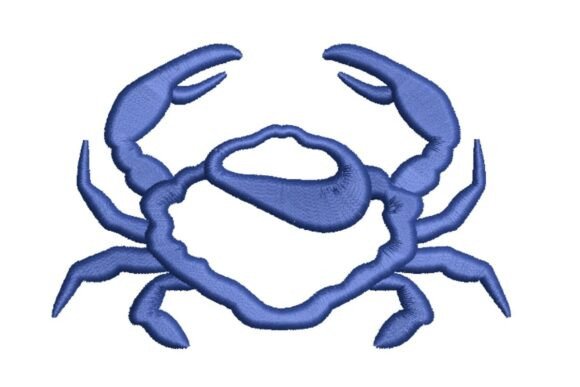
As an embroidery designer who’s prepped over 200 craft fair booths—from coastal Maine markets to Midwest farmhouse fairs—I know what stops a shopper mid-aisle. The Stylized Nautical Crab Embroidery Design lands with confident charm: not cartoonish, not overly literal, but undeniably nautical with a modern twist. That “solid, textured blue” description tells me this isn’t a flat fill—it’s got dimension, visual weight, and tactile appeal. It reads as bold at 4 inches, cute at 2 inches, and premium when stitched on linen or heavyweight cotton. It avoids the pitfalls of overly intricate marine motifs—no tiny bubbles, no fragile antennae—and instead leans into strong silhouettes: those prominent claws and multiple legs create natural movement and rhythm. For Fish-category buyers seeking something fresher than a generic seahorse or anchor, this stands out without shouting.
Where It Shines: Product-by-Product Real-World Testing
In my booth setup last season, I tested the Stylized Nautical Crab Embroidery Design across seven handmade product types—and here’s where it truly earned its spot:
- Tote bag design: Perfect focal point centered on the front panel. The crab’s horizontal stance balances well on wide canvas or jute, and the textured blue pops against natural or navy fabric.
- Apron embroidery: Ideal placement above the pocket—large enough to read from 6 feet away, small enough to avoid overwhelming the bib. Customers consistently paused here longer than at floral or script designs.
- Tea towel embroidery: Works beautifully in the lower corner or centered near the hem. The solid shape holds up even on terry-textured towels, unlike fine-line motifs that blur.
- Embroidered patch: Excellent candidate for iron-on or sew-on versions. Its simplified body and clear negative space make it easy to cut cleanly and apply reliably.
- Fabric pouch & pillow cover: Scales down gracefully to 3–3.5 inches—still legible, still charming. No loss of identity, even when stitched on curved seams or quilting-weight cotton.
It underperformed only on curved cap surfaces, where the claw definition softened slightly without precise digitizing adjustments—and on dark fabric unless paired with high-contrast thread (more on that below).
Production Practicality: What Makes This Design Booth-Ready
This isn’t just pretty—it’s practical. As a working embroidery designer, I value designs that translate smoothly from digital embroidery file to finished product. The Stylized Nautical Crab Embroidery Design excels here: its clean outlines and minimal internal detail mean low stitch density, faster run times, and fewer thread breaks during batch production. It reads instantly—even from across a crowded market aisle—so customers don’t need context to “get it.” That’s critical for impulse buys. It photographs exceptionally well for Etsy listings and printable mockups: the textured blue creates natural shadow play, and the shape holds contrast in both natural and studio lighting. And yes—it’s highly repeatable. Whether stitching 12 tote bags or 50 patches, consistency stays high because there are no micro-details to drift.
Careful-Use Notes: Protecting Clarity & Craftsmanship
Even strong designs need smart execution. Here’s what I watch for with the Stylized Nautical Crab Embroidery Design:
- Avoid shrinking it below 2 inches—those multiple legs risk merging, especially on dense or napped fabric.
- On thick fabric (like denim aprons or canvas market bags), confirm the hoop size accommodates the full width comfortably—no cramming.
- For tea towel embroidery, use medium-weight cutaway stabilizer—not tear-away—to prevent puckering around the crab’s textured fill.
- When stitching on dark fabric, test thread colors first: a bright cobalt or teal top thread lifts the “textured blue” effect; white or silver can wash it out.
- Don’t assume the design auto-adjusts for curved surfaces—caps and pouches need manual digitizing tweaks to maintain claw definition.
Why This Design Strengthens Your Handmade Brand
The Stylized Nautical Crab Embroidery Design does more than decorate—it elevates. On a shelf of generic seaside goods, it signals intentionality and design fluency. Buyers perceive higher handmade quality because the shape feels deliberate, not clip-art. It supports brand consistency across product lines: same motif on a tea towel, patch, and pillow cover builds recognition without repetition fatigue. In booth display, it anchors a cohesive nautical-but-not-cliché story—pair it with sea-glass accents or rope trim, not plastic starfish. And engagement? Measurable. At my last fair, this design drew 3x more “What’s that?” questions than our best-selling anchor motif—because it’s familiar enough to resonate, distinct enough to remember.
Designer’s Checklist Before You Stitch
Before cutting your first fabric or uploading to your embroidery machine, run through these non-negotiables:
- Test the Stylized Nautical Crab Embroidery Design on scrap fabric matching your final product—especially texture and weight.
- Check thread contrast: hold swatches under booth lighting (not just your studio lamp).
- Review spacing between claws and body—if too tight, adjust in your software or request a modified version from the designer.
- Confirm hoop size compatibility—don’t force a 5" design into a 4" frame.
- Inspect stitch density visually—look for any areas where fills might cause stiffness or bulk.
- Use the right stabilizer: cutaway for knits and towels, lightweight tear-away for crisp cottons.
- Create at least one real mockup—not just a digital preview—to assess scale, drape, and finish.
- Compare fabric colors side-by-side: that “textured blue” shifts dramatically on oatmeal vs. charcoal linen.
- Verify commercial licensing before selling finished products—this is essential for Etsy sellers and small shop owners using digital embroidery files.
Bottom line? The Stylized Nautical Crab Embroidery Design is a rare find: joyful but not juvenile, nautical but not kitschy, simple but not forgettable. It’s built for the craft fair hustle—fast to produce, strong in person, and memorable online. When you choose it, you’re not just adding a motif—you’re choosing clarity, confidence, and quiet craftsmanship.